
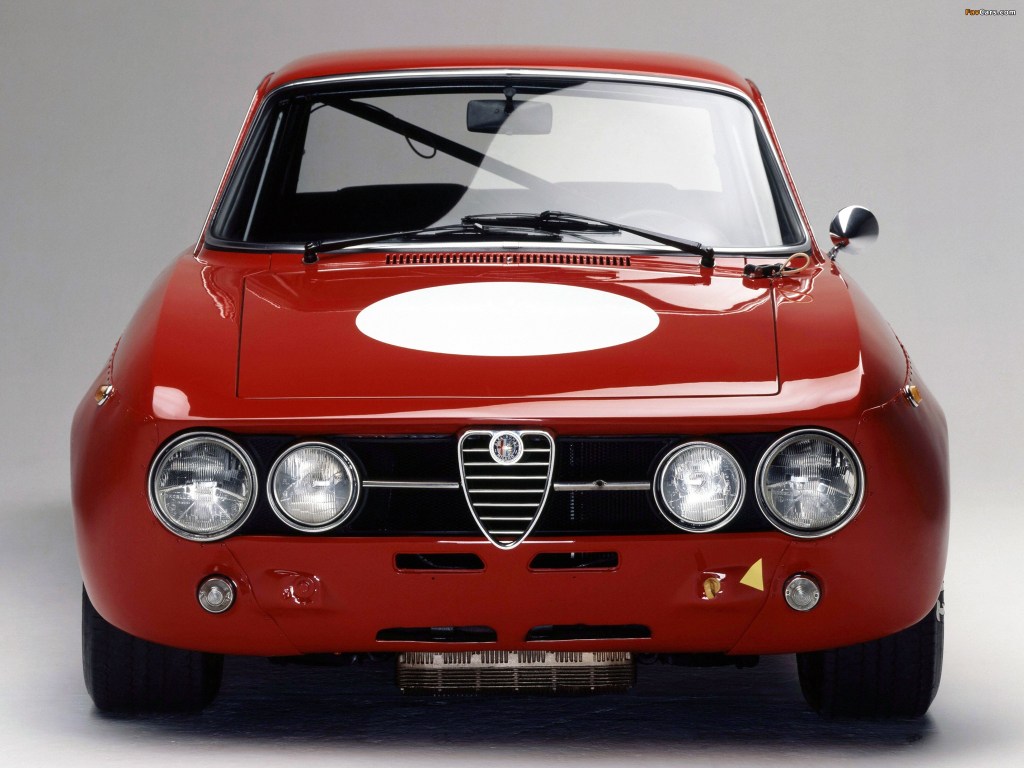
Don’t let its size fool you, this small sedan carried the weight of Alfa Romeo to new heights filled with financial and motorsport success. The first to bare the iconic three letters that we now perceive as the top performance trim for the brand. The car was so beloved that a third party company authorised by ALFA themselves made restomods for them. What is that car? The Alfa Romeo Giulia. Today we’ll show you why it is so special.
Before we give you our main points, it is good manners for us to give you a brief history lesson about the Giulia for further understanding. The Giulia was introduced in 1962 denoted “Type 105” as a sedan/wagon called the “Berlina TI” followed by a GT “Sprint” coupe and spider a year later. It was the successor to the also beloved Giulietta, also the Giulia’s design was catered to adults with small families. There were two performance variants offered, the TI Super (available on the sedan) and GTA (available on the Sprint Coupe). It had a simple front engine rear wheel drive layout. It participated in racing and won a bunch of them. Its production run was a long one, it lasted for 16 years (1962-1978). The Giulia name was resurrected in 2015 but that’s a story for another episode.
Here are four reasons why the Giulia is so special:
1. Ahead of its time
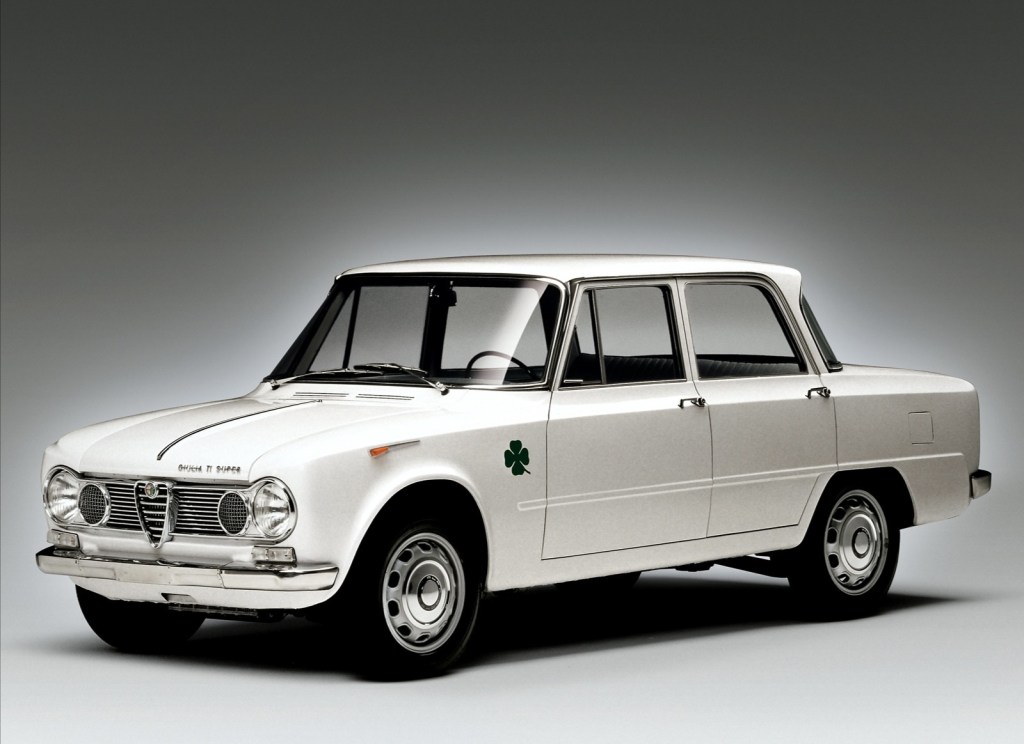
When the Giulia was introduced to the public, it had cutting edge features within its segment. Such as a reinforced body structure for improved safety, very low drag coefficient of 0.34 thanks mostly to its design, a spacious cabin, sophisticated suspension, disc brakes, a 5-speed manual transmission and lastly a peppy 1.3 or 1.6 litre DOHC inline 4, in 1962!
Would you believe me if I told you that the Giulia set the blueprint for sports sedans that came after it? Sure there were other sports sedans that came before it, but they didn’t have as much mass appeal as the Giulia. It has the perfect recipe to be a sports sedan, such as an above average engine, rear wheel drive, performance oriented suspension and a manual transmission.
The Giulia I’m specifically referring to is the TI Super (TI stood for Turismo Internationale). It featured the same 1.6 litre DOHC inline 4 but producing 112hp/82KW, and it is seriously featherweight compared to the standard model weighing just shy of 900 Kilograms dry weight.
One neat thing about the Giulia TI Super is that it is a homologation special with only 501 units produced, plus it is the first production Alfa Romeo to wear the iconic 4 leave clover. With that badge of honour representing a symbol for good-luck it managed compete in a lot of races. The most notable was in 1963, when it participated at the Tour De France Automobile achieving 1st in its class and 5th overall.
2. Motorsport Pedigree
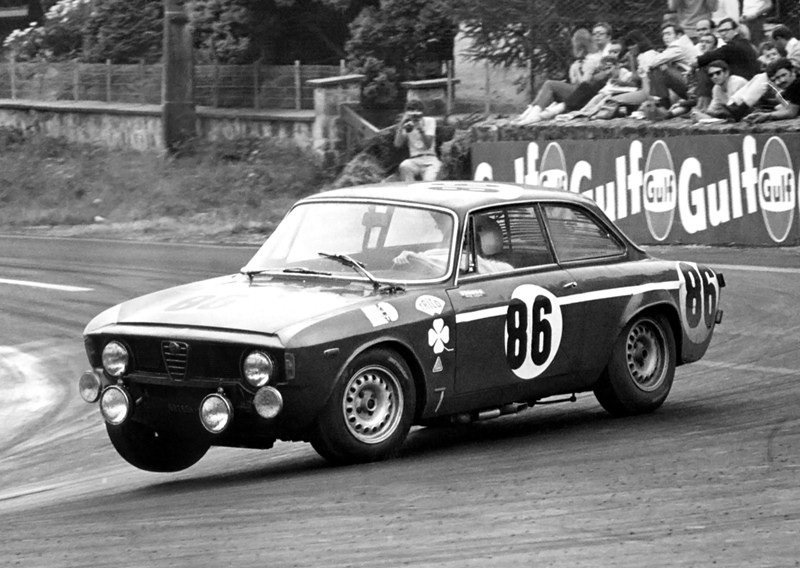
One specific model racked up a lof of motorsport victories for the ALFA brand. That model is the Giulia Sprint GTA (GTA stood for Gran Turismo Alleggerita, Alleggerita=lightweight).
The GTA was built for racing by AutoDelta, a racing division from Alfa Romeo. Auto Delta’s main priorities for the Giulia Sprint is to be much lighter and more powerful. For weight reduction they replaced steel panels with aluminium, for wheels, cam cover, bell housing and timing cover they used magnesium. Lastly they used plexiglass instead of normal glass for its side and rear windows. The road car tipped the scales at 745KG, while the race version weighed 740KG due to removing a lot of unnecessary amenities. The engine was heavily reworked with more aggressive cam profiles, the addition of two spark plugs per cylinder, lighter flywheel and a larger oil sump. The total output was for the road car was 115 hp/86KW while the racing version pushed to 170hp/127KW, however Auto Delta managed to extract over 200hp/149KW on later variants (GTA 1900 and GTA 2000).
The GTA entered racing in 1966 and at that same year it achieved over 200 race victories. Chief among which were 1966 and 1967 European Touring Car Championship and European Mountain Championship respectively. However the bulk of its racing success came from the more attainable GTA Junior. The junior was a more entry level version aimed at those who are unable to afford the 1.6 litre, it received the same treatment as its bigger sibling but with a smaller engine (1.3 litre). It might lack in the displacement department though it can be compensated through its racing participations which spans on other countries and continents. Notable achievements were the two consecutive years (1971-1972) of the 24 hours at Spa-Francorchamps, 6 hours of the Nürburgring, and 4 hours at Jarama.
3. Money Machine
The Giulia was one of Alfa Romeo’s successful models in history, selling over 1 million units in a span of 16 years (1962-1978). Anyone you can think of had a Giulia, from normal citizens, celebrities, racers and local law enforcements. An interesting aspect about the Giulia is that it had many variations. Starting with the ones mentioned earlier (Berlina Sedan, Sprint GT and Spider) and other special variants such as the TZ2, Speciale and Junior Z.
We can even speculate that the Giulia managed to keep the brand financially afloat and offered the brand leverage to return back to Formula 1 in 1975.
4. Gone But Not Forgotten
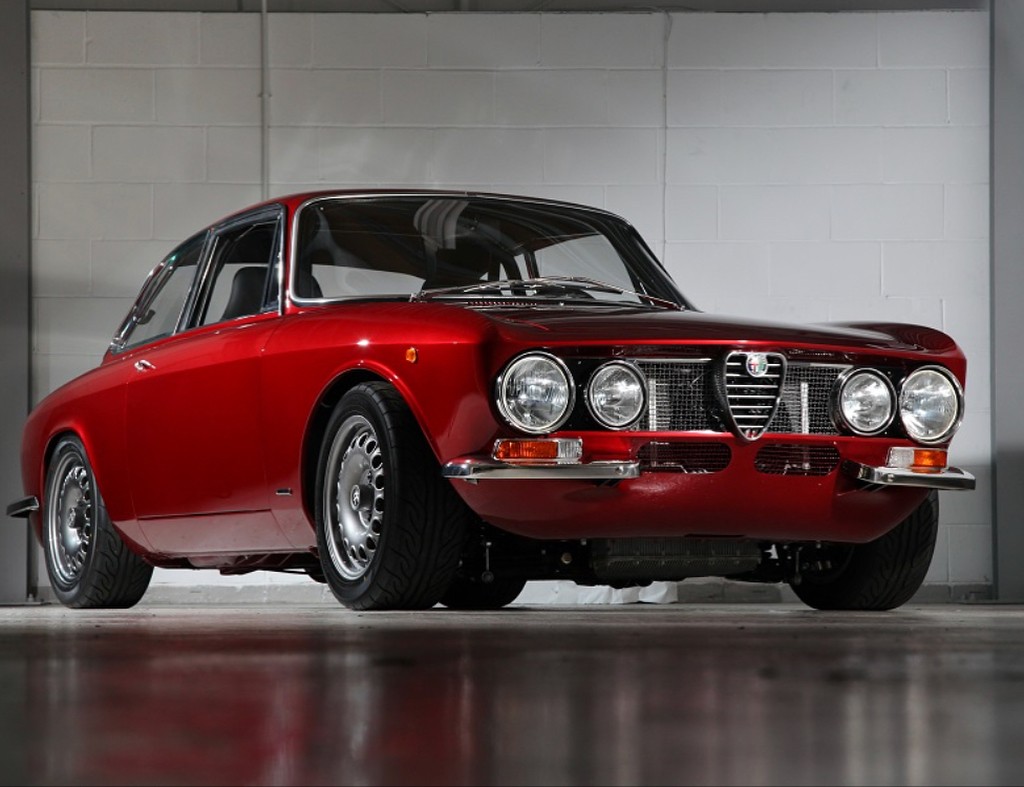
The Giulia Sprint GTA was so loved by a lot of enthusiast, they wished that the brand made more of them instead of meeting the homologation requirements of building 500 units. What makes the matter worse is that among the 500 units produced, majority of them were written off due to participating them for racing, thus making the GTA a sought after vehicle. Well there is still a gleam of hope, a British company called Alfaholics deals specifically with Type 105 Giulias (Berlina TI, Sprint GT and Spider). Their services consists of period correct restoration, manufacturing high quality parts for either restoration or performance upgrades, and lastly they do restomods, one restomod in particular is the GTA R.
The GTA R is similar to the orginal GTA but on steroids, each model is handbuilt according to the customer’s specification, on average it takes of 3000 hours to build one. The founders are Maxim Banks, Andrew Banks and Richard Banks, who are die hard Alfa enthusiasts to say the least.
The Giulia is Italy’s little people mover, champion racer, and overall a symbol of pride for the nation. What is satisfying about the brand as a whole is that they kept the same level of enthusiasm and dedication when they had made the newer Giulia. But that Giulia deserves an episode of its own.
Source:Conceptcarz
 unhealthycarobsession.car.blog