
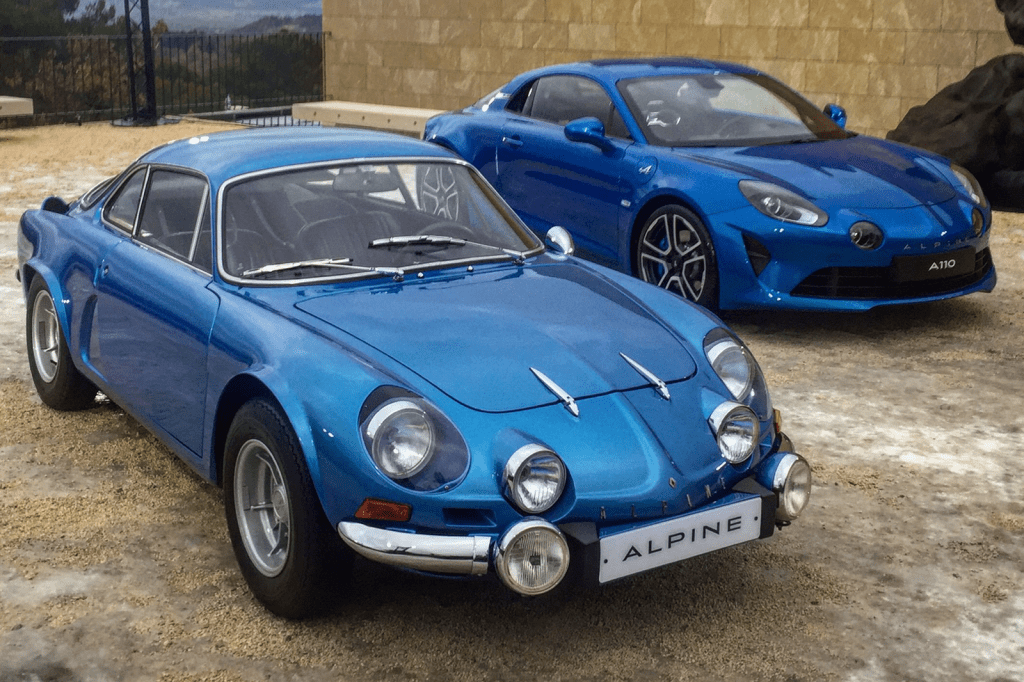
Porsche, Lamborghini, Ferrari, and Jaguar are the type of cars you would likely picture if I asked you to mention iconic cars of the 1960s. I mean who would blame you? The brands mentioned above have offered legendary cars in their own right, but what if I told you that one French car manufacturer deserves to be on that iconic group? That manufacturer is called Alpine and their halo car is the A110.
Brief history of Alpine
Alpine is a performance division for Renault, it was founded by Jean Rédélé. Jean was the son of a major Renault dealer, meaning that the fate of the Alpine brand was set in stone from the get go. In his adulthood he worked on his father’s dealership after graduating from University. His work ethic has caught attention from Renault CEO at the time, and they promoted Jean to run the same dealership his father had run. During his leadership he thought of using one of Renault’s cars (4CV) to participate in racing in order to boost marketing. He made necessary modifications in order to beat the competition, fortunately he had success on multiple racing events from Mille Miglia to Le-Mans. One key racing victory was from “Coupe des Alpes”, because it served as an inspiration for the name of the brand. Thanks to the racing achievements, he quickly climbed up the ranks by opening his division called the “Societe Anonyme Des Automobiles Alpine” (Alpine for short) in 1955.
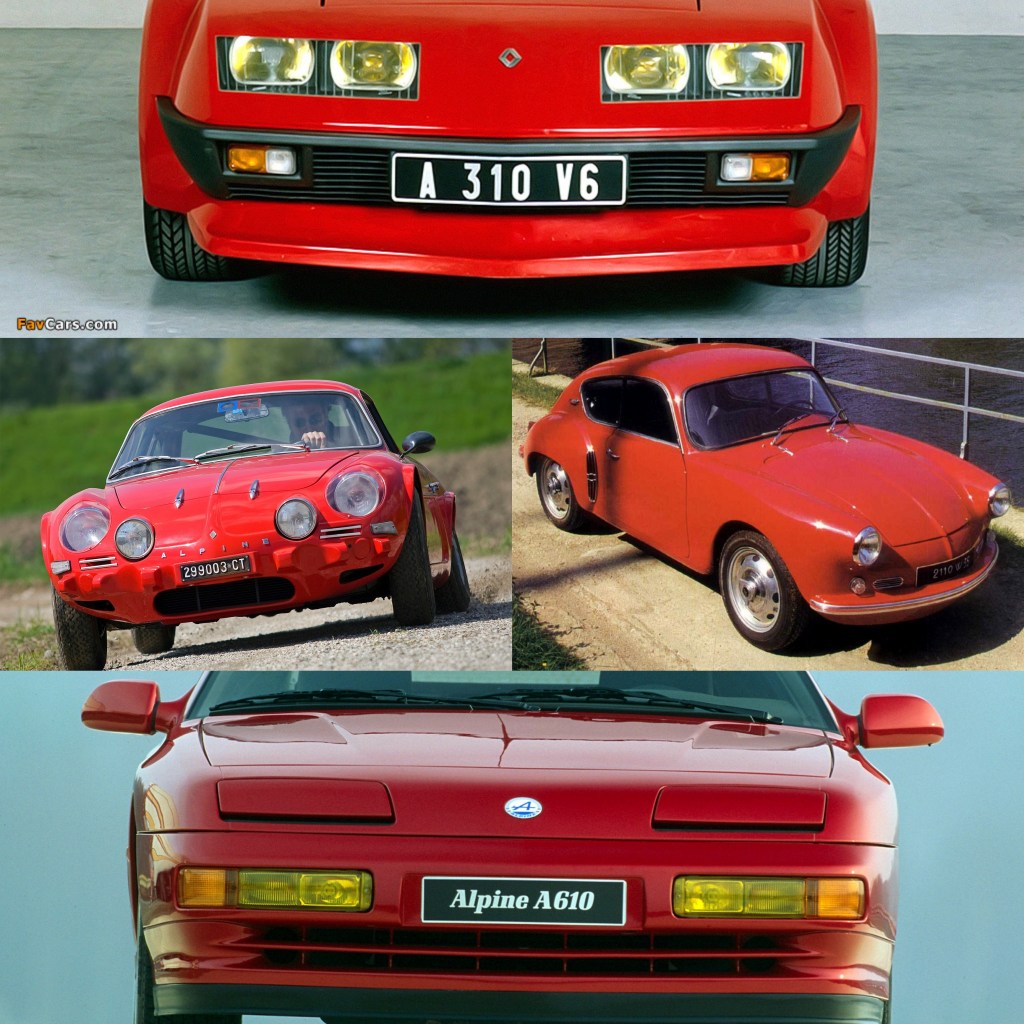
The brand’s first production model was the A106, introduced in 1958 which was based on the equivalent Renault 4CV, with the same drivetrain and everything. The difference is the coach built body shell, it’s made from fibreglass which made it much lighter. The A106 quickly evolved to the A108 which was much more refined overall, with a better engine, lighter chassis and smoothed out body shape. The A108 served as a perfect canvas of improvement for the successor which was the A110. The A110 was a dream project for Jean Redele because he wanted to build a simple yet unique sportscar that is capable of racing. The A110 was their halo sportscar from Renault-Alpine which ran production from 1961-1977, with the A310 being the successor in 1973 followed by the A610 that came in 1989. The A310 and A610 were more improved and better overall but they didn’t capture the level of notoriety the A110 had. Alpine left the market in 1996 but made their return in 2018.
Boring history lesson finally over, let me give you three reasons why the A110 is so special:
1. Simple yet unique
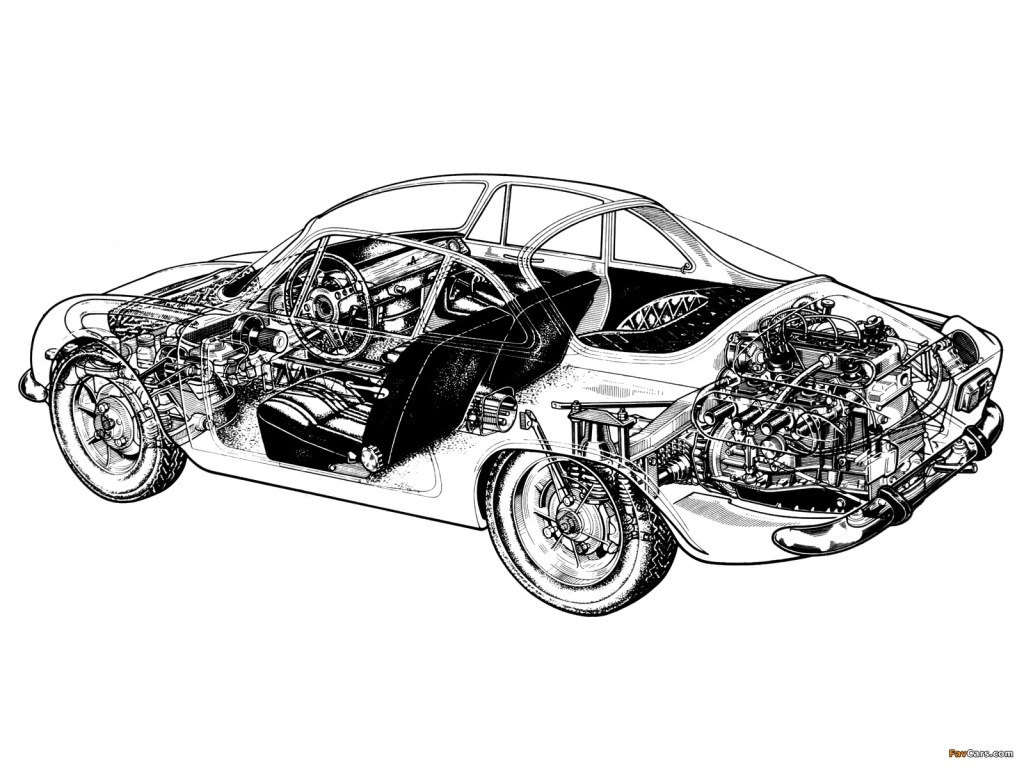
The construction of the A110 is rather basic, a steel backbone chassis and fibreglass body. What the engineers and Jean himself wanted to achieve was the Lotus philosophy of lightness, meaning keeping the construction as simple as possible but remain as effective. Overall the car weighed 700KG much lighter than Porsche’s 356 or the yet to be released 911 at the time. However it did possess some advanced features of the time such as disc brakes all round, rear engine RWD drivetrain set-up, double wishbone front suspension and the engine. Speaking of the engine, it originally derived from the 4CV, but it was quickly replaced by the newer “Cleon Alu” engine series which introduced a 5 bearing crankshaft set-up for easier engine combustion. Power ranges from 77HP/57KW to 155HP/116KW thanks to modifications from well-respected Italian tuner Gordini.
2. Motorsport Pedigree
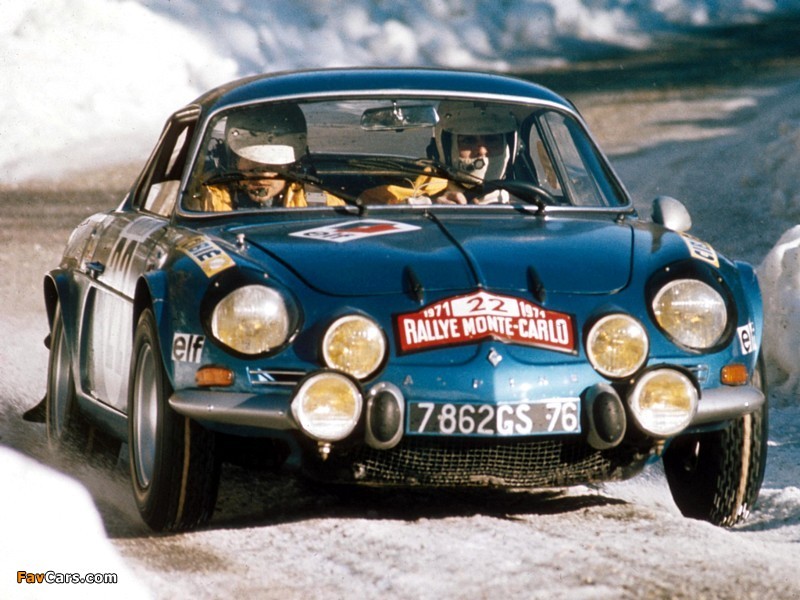
Its racing career began in the mid-1960s with little to no racing victory. However things turned around for the better when Renault ditched the heavy cast iron engine block for a lighter aluminium one, which drastically reduced the overall weight to 685KG. In addition to modifications made by Gordini it managed to produce an output of 155HP/116KW. Results came to fruition in the late 1960s when winning several French rallies. It peaked in early 1970s with notable victories like the Monte-Carlo Rally in 1971 and being the winner of the 1st annual World Rally Championship in 1973. Its winning streak came to an end when Lancia introduced their own Rally monster the Stratos in 1974. Unlike the A110, the Stratos was built for the sole purpose to compete at rally events, rendering the A110 obsolete.
3. The bloodline continues
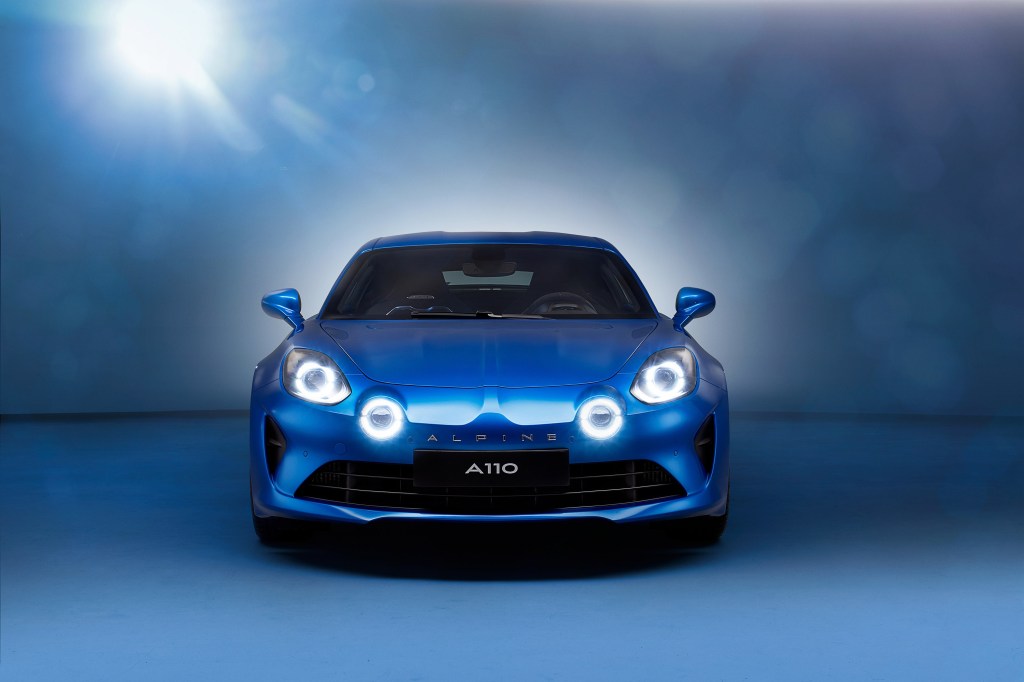
As mentioned earlier on the history section that Alpine returned to the market after a 22 year hiatus. Their comeback was in the form of the revival of the A110, and indeed it still retained the philosophy of the original but on a modern setting. The design clearly pays homage to the original with its signature dual headlights.
Let’s talk about weight, the engineers wanted the car to be as light as possible but tried to conform to the safety standards as well as meeting certain requirement from the customer segment. The car on its own weighed just shy above 1000KG net weight, the main contributor was the aluminium chassis and body construction. Other supporting contributors were the forged aluminium wheels, specially made seats from SABELT only weighed 14KG each, and the handbrake is integrated to the rear brake callipers.
The engine has been derived from Renault’s Megane RS 280 with varying power outputs depending on the vehicle trim. Lastly motoring journalists love the new A110, so much so that one of the iconic Top Gear trio James May owns one, which serves as a testament of how desirable the car actually is.
The A110 is one of those cars that has the same level of performance credentials, unique looks and racing pedigree as the likes of Porsche, Ferrari and Jaguar, yet the mainstream public aren’t familiar with the brand, why? Personally it all comes down to two factors, poor management oversight and uncontrollable external factors (I.e. fuel crises, new government policies and regulations etc.) that hindered the success of the brand. And it’s a shame because even the newer A110 is not on the radar of your typical sportscar buyer. However let’s not deny how special the A110 really is, indeed it’s one of France’s finest.
 unhealthycarobsession.car.blog
